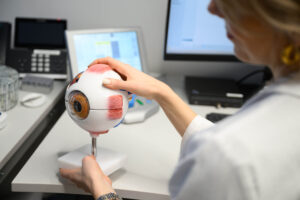

La détection précoce du glaucome est cruciale pour prévenir les dommages au nerf optique et la perte de vision. Notre cabinet vous offre des diagnostics complets avec des technologies de pointe et des conseils individuels.
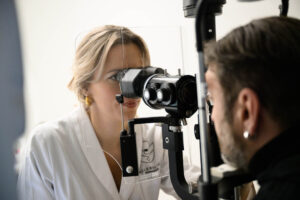
Dans notre cabinet, nous vous proposons des diagnostics de pointe pour la détection précoce du glaucome. Les éléments clés incluent :
Si le glaucome est diagnostiqué, diverses approches thérapeutiques sont disponibles pour abaisser la pression intraoculaire et prévenir la progression de la maladie :
Le choix de la thérapie est fait individuellement et en étroite coordination avec vous. Notre objectif est de protéger votre vision et de maintenir une haute qualité de vie pour vous.
Pourquoi le glaucome est-il si dangereux ?
Le glaucome passe souvent inaperçu pendant longtemps et peut entraîner des dommages irréversibles au nerf optique. Des examens réguliers préviennent des conséquences graves.
À quel âge devrais-je me faire tester pour le glaucome ?
Nous recommandons un dépistage du glaucome à partir de 40 ans, surtout si vous avez des antécédents familiaux ou d'autres facteurs de risque.
Combien de temps dure un examen du glaucome ?
L'examen est simple et prend généralement 30 à 45 minutes, selon l'étendue des tests.
Le glaucome est-il curable ?
Non, le glaucome ne peut pas être guéri, mais un diagnostic et un traitement rapides peuvent contrôler efficacement la progression de la maladie.

Chères patientes et chers patients,
notre cabinet sera fermé du 28.07.2025 au 03.08.2025 inclus fermé.
À partir du 04.08.2025 nous serons de nouveau à votre disposition comme d'habitude.
En cas d'urgence, veuillez contacter le service d'urgence médicale au numéro de téléphone :
0800 33 66 55
Vous pouvez prendre rendez-vous à tout moment en ligne ou via notre site web.
Nous vous remercions de votre compréhension !
Votre équipe de cabinet