Dry eyes: causes, symptoms, and what really helps
A long day at the laptop, and the eyes burn as if someone has sprinkled sand in them. They itch, feel tired, and sometimes they are also red. You blink once, for a second it feels better, then the sensation returns.
This is not ordinary fatigue, and in many cases, it does not go away on its own. It is dry eyes (Sicca syndrome), one of the most common complaints that patients bring to the ophthalmology practice.
The topic is therefore challenging because the symptoms may seem trivial at first glance. However, untreated dryness over a long period not only affects comfort. The tear film is the outermost protective layer of the eye, and if it is permanently damaged, it can lead to fluctuations in vision, increased sensitivity, chronic inflammation, and microscopic damage to the eye surface. Several professional societies, including the Swiss Ophthalmological Society (SOG-SSO) and the American Academy of Ophthalmology, now consider dry eyes to be a distinct chronic disease.
In this article
What do dry eyes really mean?
The eye surface is covered by a thin, three-layer moisture film, the tear film. It not only moistens. It protects against pathogens, smooths the optical surface, and supplies the avascular corneal tissue with nutrients.
The three layers consist of an outer lipid layer, a middle aqueous layer, and an inner mucin layer, each produced by different glands. If one of them is damaged, the tear film breaks up more quickly, and the eye surface dries out.
The international ophthalmological community defines the disease of dry eye based on the so-called TFOS DEWS II consensus (2017). According to the definition, it is a multifactorial disease of the tear film and the eye surface, associated with tear film instability, hyperosmolarity, inflammation, and neurological changes.
There are two main subtypes. In aqueous deficiency, the tear glands produce less fluid, often due to age, hormonal changes, or autoimmune diseases such as Sjögren's syndrome. In the evaporative type, which is significantly more common, the fluid evaporates too quickly because the outer lipid layer is damaged. The most common cause of this is meibomian gland dysfunction (MGD), which affects the small sebaceous glands at the eyelid margin. Both types often occur together.
The most common causes and risk factors
Dry eyes rarely come „out of nowhere.“ Usually, several factors come together, and as soon as one of them becomes present, it often triggers the others.
Age is the fundamental factor. International studies show that the frequency of symptomatic dry eyes significantly increases, sometimes multiple times, in individuals over 50 years old. In women, hormonal changes, particularly menopause, as well as hormone replacement therapies further increase the risk.
The modern, screen-centered daily life is also a significant risk factor. During hours in front of the computer and smartphone, the blink frequency decreases significantly. Without blinking, the tear film breaks up. Complaints related to screen work today make up a substantial part of consultations.
In front of the screen
5×
fewer blinks per minute than in a normal state. Instead of blinking 15 to 20 times, we often only blink 5 times in front of the monitor.
Air-conditioned, heated, or mechanically ventilated rooms additionally draw moisture away. Added to this are contact lenses, whose long-term wear alters the dynamics of the tear film.
Certain medications are also frequently involved: antihistamines, some antidepressants, blood pressure medications, and hormonal contraceptives. Among the diseases, Sjögren's syndrome, rheumatoid arthritis, thyroid diseases, and diabetes mellitus significantly increase the risk. Eyelid margin inflammation (blepharitis) often accompanies dry eyes and can also lead to complaints on its own.
Surgical histories also play a role. After refractive corneal laser procedures (LASIK, FemtoLASIK) or after cataract surgery, the dynamics of the tear film can change temporarily or permanently. These are not complications but known, well-treatable accompanying symptoms.
Symptoms of dry eyes that you should not ignore
The symptoms are diverse and often deceptive. The most easily recognizable is the persistent burning, itching, and foreign body sensation, as if sand or an eyelash has gotten into the eye. This intensifies especially in the evening or after prolonged concentration in front of the screen.
Many patients are surprised that one of the typical symptoms paradoxically is constant tearing. When the eye surface dries out, the nerve endings send an emergency signal to the tear gland: quickly. The result is a sudden, watery flood of tears that provides temporary relief but does not solve the problem. Patients often say, „My eyes can't be dry; they are constantly tearing.“ However, that is precisely one of the typical signs.
Blurred or wavering vision is also common. The intact tear film acts as a smooth optical surface. When it breaks, light is scattered. Patients experience it as the image becoming briefly unclear, they blink, it gets better, and after a few seconds it blurs again. This is particularly bothersome when reading and driving.
Other typical symptoms: pronounced light sensitivity, redness, a feeling of fatigue in the eyes, difficulties wearing contact lenses, heavy eye opening in the morning, or a sticky feeling upon waking. In some patients, the complaints worsen especially in the afternoon and evening, while in others they are most pronounced in the morning.
When should you see an eye doctor? If the complaints have persisted for several weeks and do not respond to basic measures. Also in cases of fluctuating visual acuity, accompanying pain, or persistent redness. Early detection is important, as chronic, untreated dryness can long-term damage the eye surface.
What to expect during an eye examination
The eye examination for dry eyes is not complicated, but thorough. In a modern practice, it typically lasts 30 to 45 minutes and consists of several sequential steps.
The first is a detailed medical history. The specialist asks about the symptoms, their duration, severity, and daily pattern. Questions are asked about medications, systemic diseases, lifestyle, screen use, and contact lenses. The symptom pattern is often already revealing.
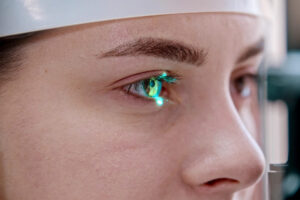
This is followed by a biomicroscopic examination of the eye surface with a slit lamp. The doctor closely examines the cornea, conjunctiva, and the openings of the Meibomian glands with high magnification. This immediately reveals whether the eyelid margin is inflamed, whether the Meibomian glands are blocked, or whether the cornea shows microscopic erosions.
The diagnosis is based on three classic tests. The Schirmer test measures tear production within five minutes. The tear film break-up time (TBUT) shows, with the help of a fluorescent dye, how quickly the tear film breaks after blinking. Values over ten seconds are considered normal, below that as unstable. The staining of the eye surface makes visible where cell damage exists.
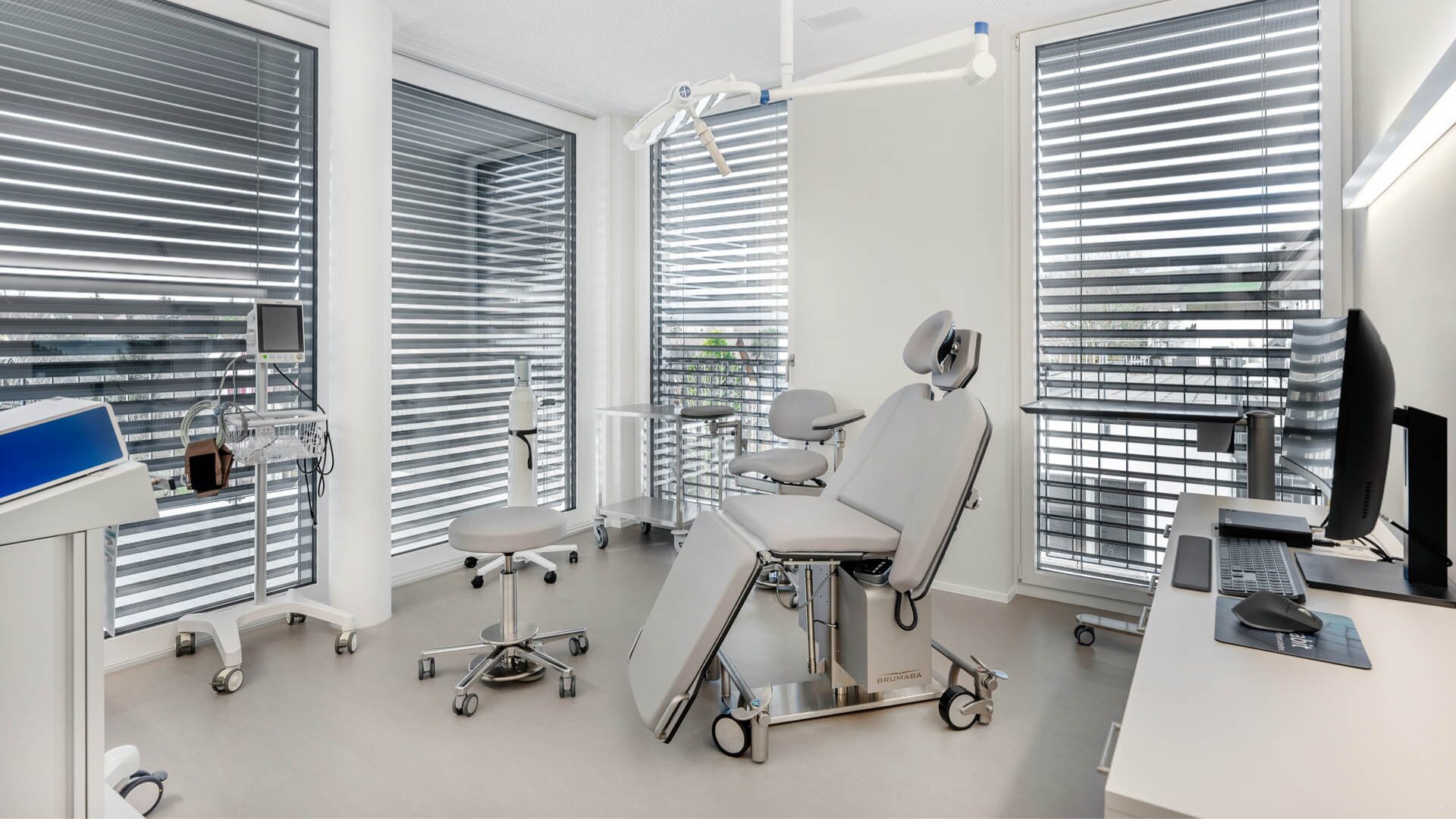
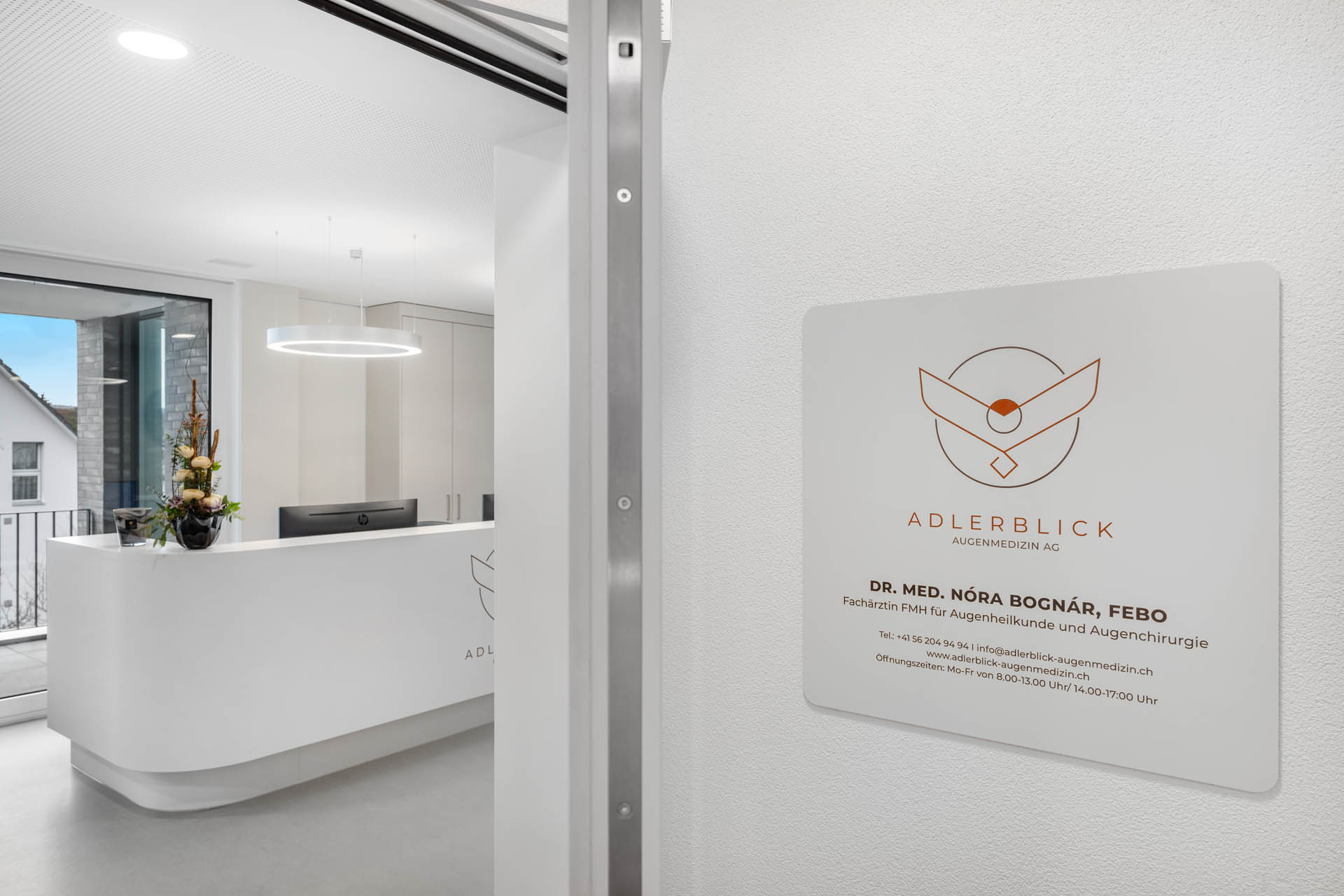
More modern practices additionally use meibography, an infrared imaging technique that depicts the structure of the meibomian glands. The equipment at Adlerblick Eye Medicine allows for precise classification of dry eyes, which is the basis for successful treatment.
Adlerblick Eye Medicine · Döttingen
Clarity about your complaints
A careful ophthalmological examination provides the precise type diagnosis and the corresponding treatment plan.
What really helps against dry eyes? Proven treatments
Treatment is carried out step by step. The international protocol (TFOS DEWS II) distinguishes four main stages according to severity. No one jumps immediately to complex interventions when basic measures can already bring improvement.
The basic treatment consists of artificial tears. Preservative-free single-dose preparations are better if you need to drop multiple times a day, as preservatives can irritate the eye surface over time. Drops with hyaluronic acid or based on carboxymethylcellulose provide longer-lasting moisture. Lipid-containing drops work better for the evaporative form.
The second stage consists of eyelid hygiene and warm compresses. In cases of meibomian gland dysfunction and eyelid margin inflammation, this often brings significant improvement on its own. The warm compress, ideally with a specially designed eye mask, melts the hardened secretions in the glands and restores the lipid layer.
If the basic treatment is not sufficient, medication therapies are used. Ophthalmological anti-inflammatories (low-dose steroid, cyclosporine, lifitegrast) reduce surface inflammation. They may only be prescribed by a specialist doctor.
Among the clinical interventions is the closure of the tear ducts with small silicone plugs (punctum plugs), IPL therapy, and manual expression of the meibomian glands. The choice of clinical procedures is always made based on ophthalmological assessment.
Three treatment stages
Stage 1
Basic treatment
Preservative-free artificial tears, warm compresses, eyelid hygiene, omega-3 supplementation.
Stage 2
Medication therapy
Prescribed anti-inflammatories such as cyclosporine, lifitegrast, or low-dose steroid.
Stage 3
Clinical interventions
Closure of the tear ducts (punctum plugs), IPL therapy, meibomian gland expression.
The choice of the appropriate stage is always made after an ophthalmological examination.
What you can do at home against dry eyes
In addition to clinical treatment, daily habits are at least as crucial. The 20-20-20 rule is the most well-known and effective: focus on an object about 6 meters away for 20 seconds every 20 minutes. This short break restores the blinking rhythm and relaxes the accommodation muscles.
Conscious blinking seems small, but has an effect. When you notice that you have been staring at the screen for a long time, blink slowly and completely several times, with your eyelid fully closed.
The Humidity of the environment is also crucial. During the heating season in winter, indoor humidity often drops below 30 percent. A simple humidifier or a bowl of water next to the heater can make a big difference. Air conditioning, fans, or direct blow-dryer air to the face should be avoided.
At least one and a half to two liters of water per day support the watery component of the tear film. Caffeine and alcohol have a diuretic effect and can increase dryness. Omega-3 from fish oil, flaxseed, chia, or walnuts improves the lipid layer of the tear film, especially in cases of meibomian gland dysfunction. The effect occurs after weeks.
Five tips for a screen day
- Every 20 minutes, look at an object 6 meters away for 20 seconds (20-20-20 rule).
- Position the monitor slightly below eye level so that the upper eyelid covers a larger part of the eye surface.
- Place a humidifier next to the heater or desk, especially in the winter months.
- Keep preservative-free artificial tears handy and use them before discomfort sets in.
- Switch from contact lenses to glasses at least one day a week to give the eye surface a break.
Frequently asked questions
Question
What to do for dry eyes?
The first step is preservative-free artificial tears. This is supplemented by conscious blinking, regular screen breaks, and a humidifier in heated rooms. If discomfort does not improve after two to three weeks, an eye examination is advisable.
Question
Are dry eyes dangerous?
Not life-threatening in itself, but the long-term untreated form can have serious consequences. The chronically dry eye surface becomes inflamed, microscopic erosions can occur on the cornea, and vision may permanently deteriorate.
Question
When should I see an eye doctor for dry eyes?
If the discomfort has lasted more than two to three weeks and does not respond to basic measures. Also, in cases of fluctuating vision, accompanying pain, or persistent redness. An urgent examination is indicated in cases of sudden severe pain or flashes of light.
Question
Which artificial tears are best?
There is no single „best“ option. The choice depends on the type. Preservative-free formulations are recommended if you are using drops multiple times a day. Drops with hyaluronic acid provide lasting moisture. Lipid-containing drops work better for evaporation types.
Question
Does Omega-3 really help against dry eyes?
Studies suggest that it helps, but not immediately. Omega-3 fatty acids improve the lipid layer of the tear film, especially in meibomian gland dysfunction. A noticeable improvement occurs after six to eight weeks. Alone, it is usually not enough, but it is an effective supplement to treatment.
Question
Can dry eyes damage vision?
Short-term no. Long-term, if the condition remains chronic and untreated, yes. A permanently damaged eye surface can lead to microscopic damage to the cornea, which also affects visual acuity. Therefore, precise type diagnosis and timely, targeted treatment are crucial.
What matters
Dry eyes are among the most common ophthalmological complaints today, and the literature expects a further increase in prevalence in the coming decades. You do not have to live with it. The type of complaints can be precisely determined, and there is an evidence-based, well-founded treatment for almost every form.
„The symptoms are not a sign of aging that one must accept. The tear film is the protective system of the eye.“
Adlerblick Ophthalmology is located in Döttingen, in the center of the Zurzach district, easily accessible from Brugg, Bad Zurzach, and Baden. As an ophthalmology practice in Aargau, we offer the full spectrum of ophthalmological care, from the diagnosis and treatment of dry eyes to outpatient YAG and SLT laser procedures.
If you notice the mentioned symptoms persistently, do not wait for weeks. The examination is simple, painless, and its conclusion is clear. The eye does not regenerate on its own, but with the right, targeted support, the balance of the tear film can be restored in most cases.